Thank you for your continued support of Today's Dietitian.
Below is information from one of our sponsors.
|
||||||||
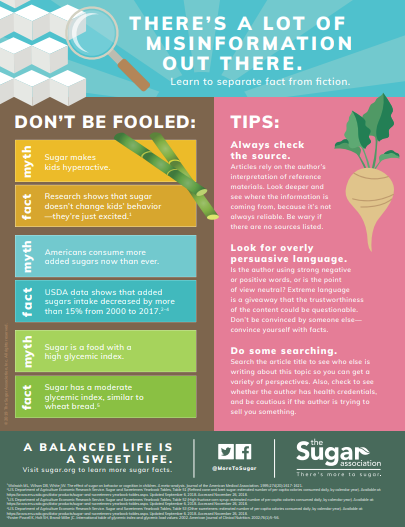
IntroductionWith so much interest in added sugars and artificial sweeteners recently, as well as a greater than typical spotlight on sugar this summer, we wanted to share some tools and numerous resources to help you cut through the noise and discuss the facts and science of real sugar with your clients and patients. Real sugar is a hot topic:One of the challenges of being an RD today, is that people are subjected to an endless, often overwhelming, stream of both information and misinformation alike. With the current presidential administration placing a spotlight on food and nutrition there’s an increased interest in diet and specific ingredients right now, but unfortunately, also much confusion. When it comes to added sugars, on one hand the public is hearing they should stop eating sugar entirely, on the other, they’re hearing that real sugar is healthier than other forms of added sugars and sweeteners. The fact is that added sugars currently make up around 13% of Americans total calories – the lowest amount in 40 years and close to the lowest amount ever recorded (11% in 1909). The steep decline in added sugars intake over the past 25 years has coincided with rising rates of childhood obesity and chronic disease – yet most people are unaware of these data and continue to demonize and place a significant amount of blame on real sugar for these conditions. As you’ll know from experience, simple communication is a key component of our role as RDs. The good news is – conversations about real sugar don’t need to be complicated.
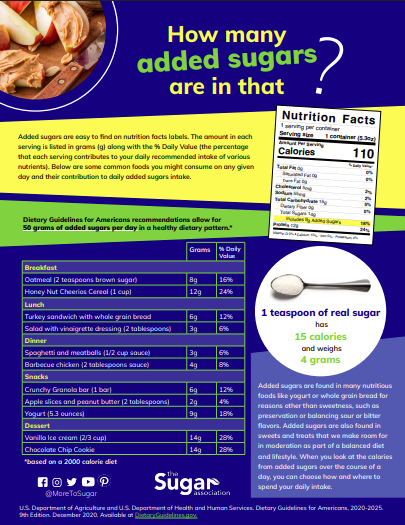
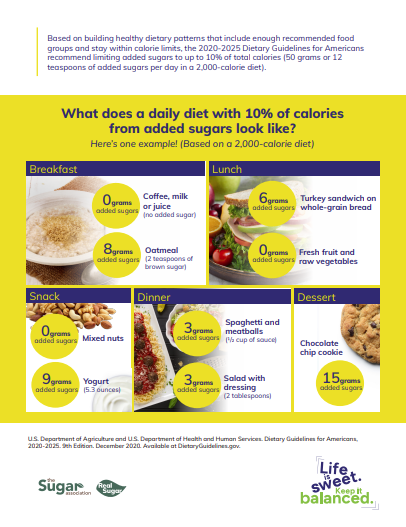
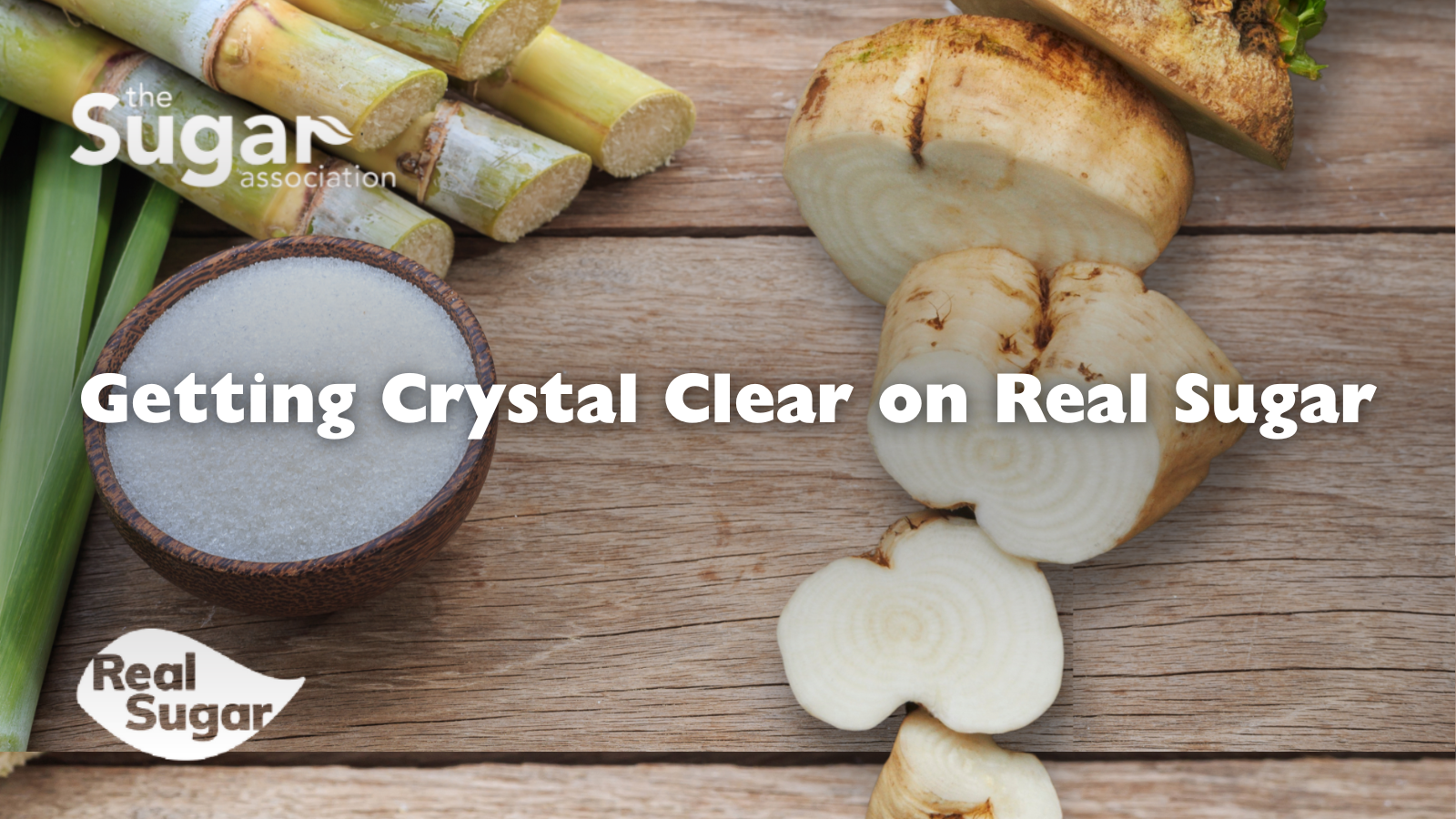
Real Sugar plays a key role in healthy balanced dietsAs people are being bombarded with extreme dietary advice, and warnings about ultra-processed foods, it’s important to communicate to patients and clients the basics, such as sugar is simply sucrose. It comes only from sugar beet and sugar cane plants, which are turned into sugar crystals. Real sugar is rooted in nature, not a lab. A balanced diet is one that is not extreme. As an RD, you understand better than most how important it is to take a balanced approach to healthy lifestyles. Sugar has a place in a balanced diet by not only adding flavor but also numerous critical functions that help people enjoy a wide variety of foods. The Dietary Guidelines for Americans recommendations allow for up to 50 grams – or 12 teaspoons – of added sugars per day as part of a healthy dietary pattern. This is a reasonable and realistic goal, and most Americans aren’t far off from this goal.
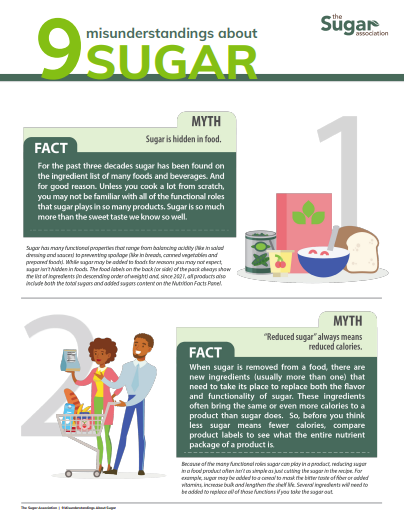
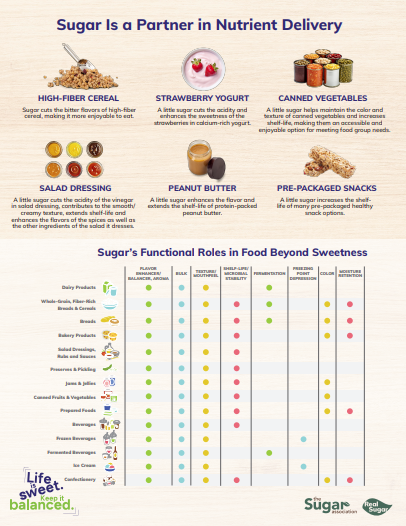
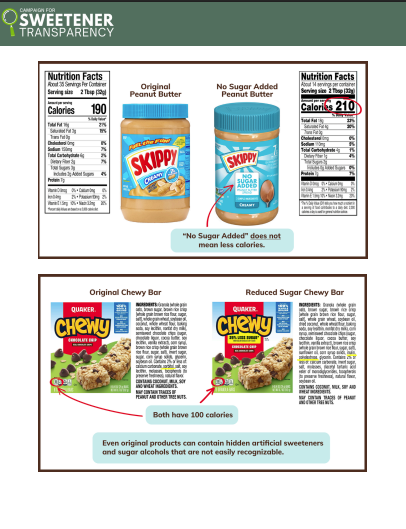
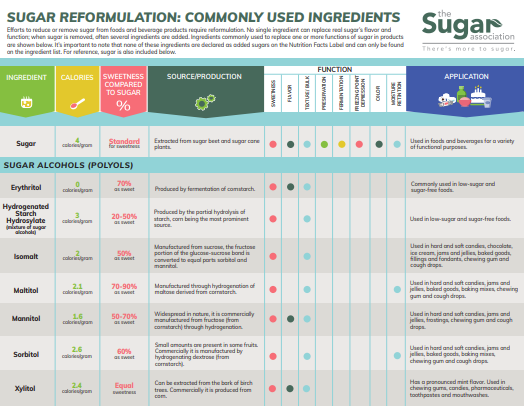
Real Sugar is irreplaceable as a single ingredientMany people don’t realize the many functions real sugar has in our food, and as RDs it’s important our clients and patients know that there’s more to sugar than sweetness. Sugar acts as a preservative, adds texture to food, and balances bitter and acidic tastes, aiding in nutrient delivery. Extreme rhetoric about real sugar is misleading and has real consequences. It’s not possible to remove real sugar from food without adding one or more other ingredients – often adding the same or more calories – and including additives like artificial sweeteners that have already skyrocketed in our food supply. While many Americans want to reduce their added sugars intake, they don’t want to do so by increasing their intake of artificial sweeteners and may even be unaware they are consuming them. Our research found that 87% of people say they want to know when artificial sweeteners are in their food, but 66% struggle to identify them from chemical names on ingredient lists – and unfortunately that’s the only thing the government currently requires food companies to disclose. Our research also found that 55% of consumers think that products claiming to be no/low reduced sugar are lower in calories, but that is often not the case. In fact, some of these products actually contain more calories. At the Sugar Association, we started our Campaign for Sweetener Transparency back in 2020 because we feel strongly that Americans have the right to know what artificial sweeteners and other non-sugar sweeteners are in their food, and how much. If you do too, you can sign our petition asking HHS Secretary Robert F. Kennedy Jr. to increase sweetener transparency here.
Facts over fearDespite its role as the most popular dietary scapegoat, sugar plays a key role in healthy and balanced diets, and sugar consumption has been declining as chronic diseases attributed to its consumption rise. As RDs it’s our job to recommend evidence-based nutrition advice and advise our patients and clients against extreme dietary advice that's not rooted in science. It’s time to cut through the hype, with real conversations on real sugar. There’s lots of room for education on real sugar – let’s help our patients enjoy a balanced diet and embrace facts over fear! |
||||||||
|
Follow us: Facebook | Instagram | Twitter | Pinterest | YouTube | LinkedIn | Blog | TikTok
1310 L St NW, Suite 400, Washington, DC 20005 |